
Most stores don’t have a traffic problem — they have a flow problem. Customers come in, browse, pick items… and then things slow down. Lines build, staff get backed up, and momentum drops right at the point where sales should be closing.
If you want more efficient sales, you don’t always need more staff or more products. You need fewer bottlenecks.
Start With How Customers Move
Watch how people actually move through your store, not how you think they do.
Common issues show up quickly:
- tight walkways around key displays
- awkward turns near high-traffic areas
- dead zones where customers don’t go
If people can’t move comfortably, they rush. When they rush, they skip sections and buy less. A clear, open path usually does more for sales than adding another display.
Reduce Friction at Decision Points
There are moments in the store where customers pause — comparing items, checking sizes, deciding what to buy. If those areas are cramped or unclear, people move on instead of deciding.
Give those spots space. Keep nearby fixtures simple. The easier it is to stop and think, the more likely they are to commit.
Checkout Speed Is Where Sales Are Won or Lost
Everything leads to the checkout. If that part breaks down, it affects the whole experience.
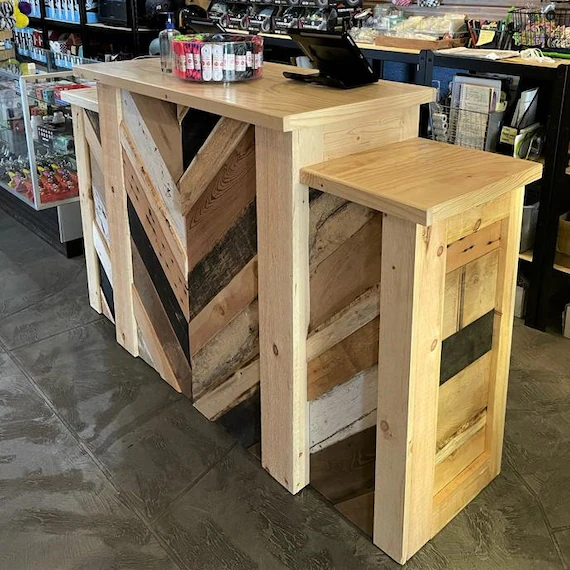
This is where pos counters come into play. Not just as a place to process payments, but as part of the overall flow. If the counter is too small, poorly positioned, or cluttered, it slows down every transaction.
You want a setup where:
- staff can process quickly without reaching or turning too much
- customers know exactly where to go
- lines form naturally without blocking other areas
If checkout feels smooth, the entire store feels more efficient.
Keep Staff Movement Efficient
Customers aren’t the only ones moving — staff are constantly walking, restocking, helping, and handling transactions.
If your layout forces staff to take extra steps for basic tasks, it adds up fast. Over a full day, that lost time impacts how quickly customers are served.
Keep frequently used items close to where they’re needed. Reduce back-and-forth wherever possible.
Don’t Let Displays Block the System
It’s easy to keep adding fixtures over time. A table here, a rack there — eventually, the layout gets tighter without anyone noticing.
The problem is, those additions often interfere with flow:
- blocking sightlines
- narrowing walkways
- creating confusion near key areas
Every fixture should earn its space. If it’s in the way, it’s costing you more than it’s helping.
Make It Easy to Adjust
No layout is perfect from day one.
The stores that run efficiently are the ones that adjust regularly. Moving a rack, shifting a counter, opening up space — small changes can fix problems quickly if you’re paying attention.
If everything is fixed in place, it’s harder to improve.
What This Comes Down To
Efficient sales don’t come from pushing harder — they come from removing friction.
Clear movement, simple decision areas, and a checkout setup that doesn’t slow things down will always outperform a crowded store with more fixtures. Keep things moving, and the sales follow.